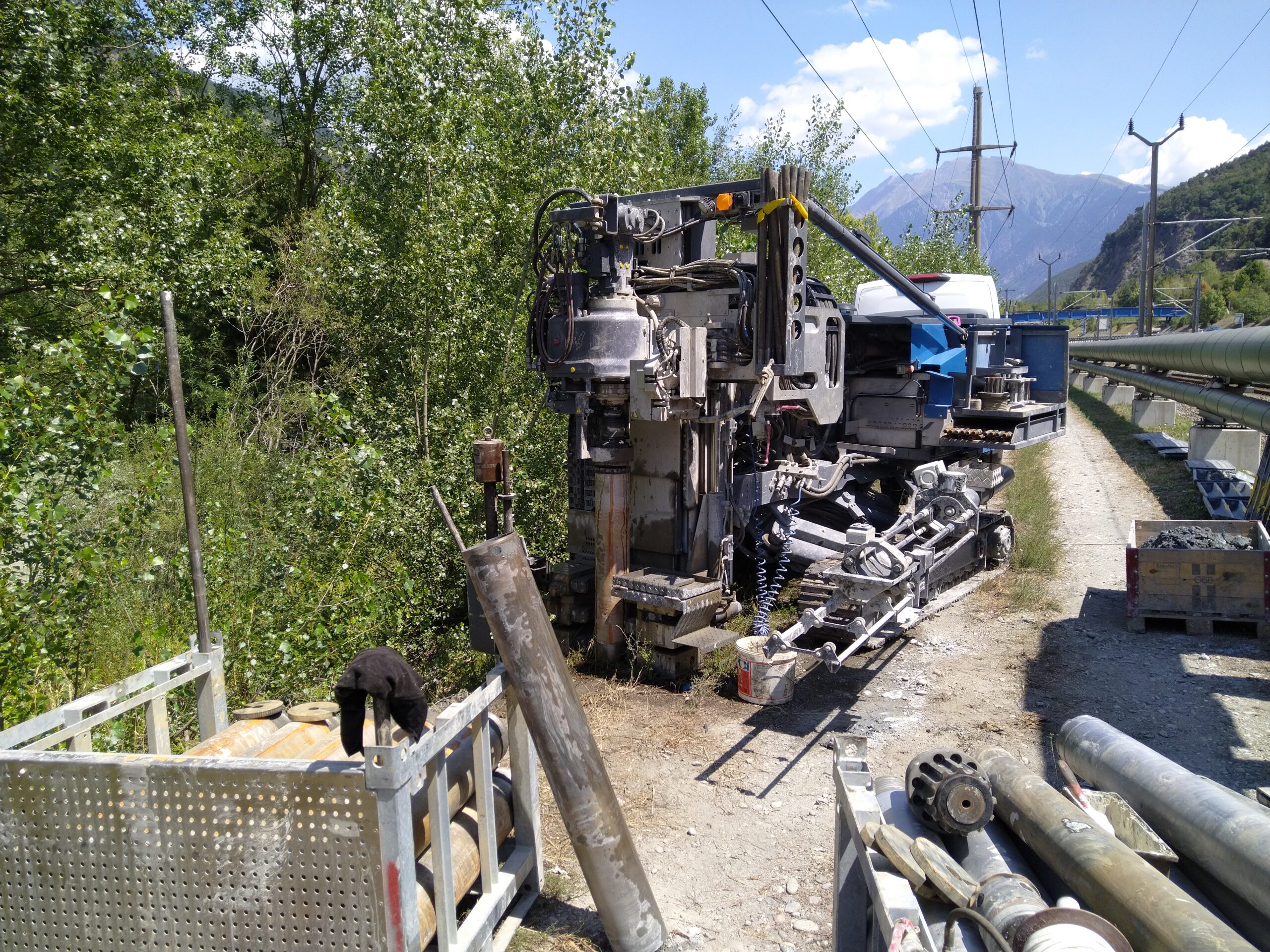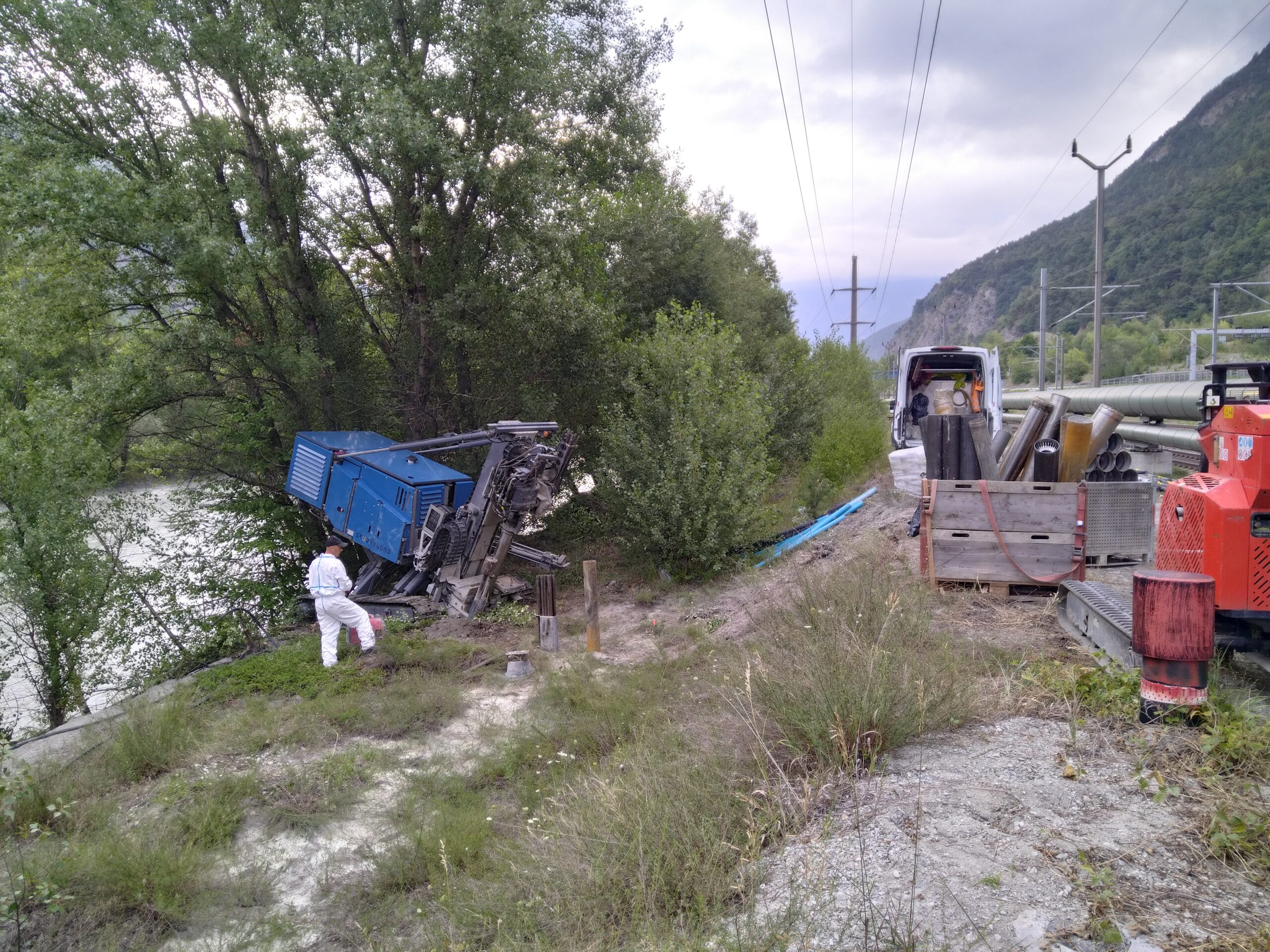
The brief from Rovina + Partner AG: twelve vertical and two inclined boreholes to investigate the subsoil for the planned diaphragm wall at the Gamsenried landfill site. The diaphragm wall is intended to permanently prevent the ingress of pollutants into the groundwater of the Rhone Valley.
Brig-Glis, Valais
Rovina + Partner AG
Studersond AG
4 pieces | diameter 150 / 200 mm
20–40 m
Contaminated loose rock substrate (river gravel)
Desanding, short-term pumping tests
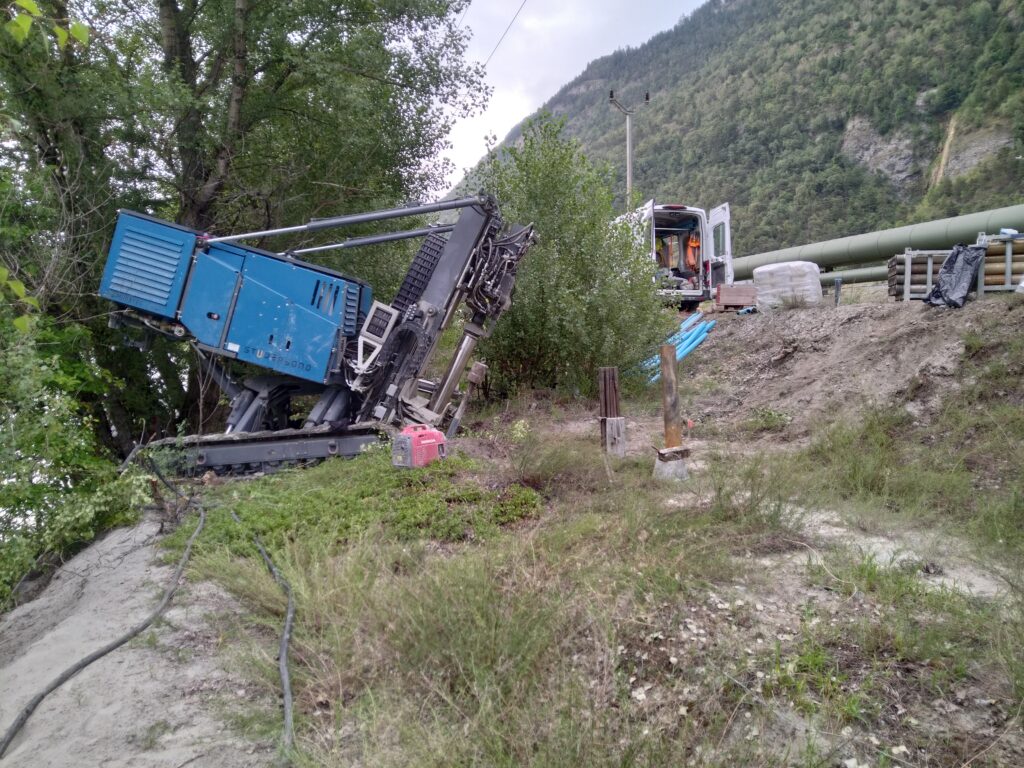
Angled drilling from the Rhône embankment down to beneath the Rhône, in the immediate vicinity of the railway tracks; protective clothing must be worn
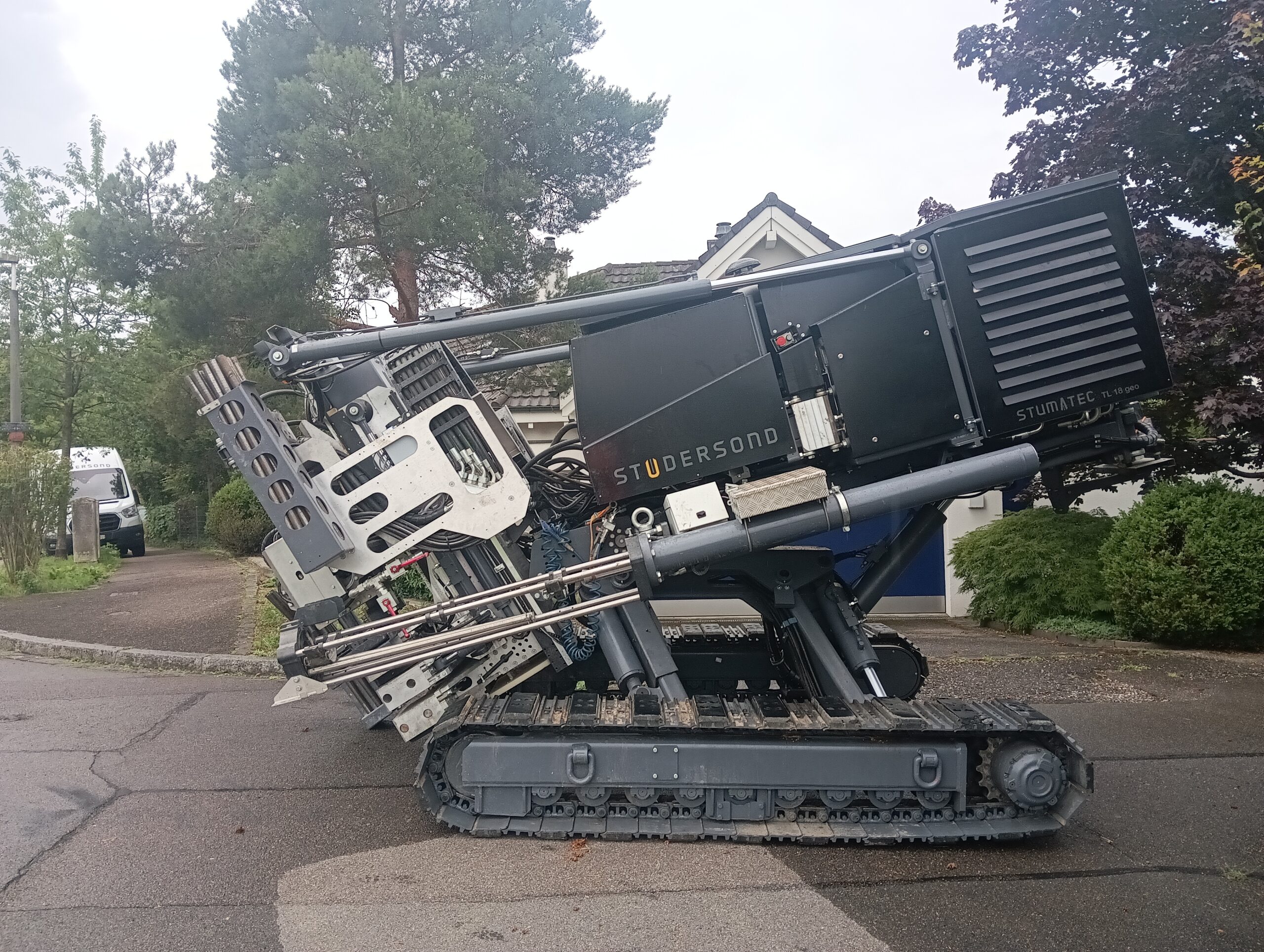
The effectiveness of a drilling method at a contaminated site is evident in the sample collection process. Material carryover and cross-contamination between layers must be prevented—whether caused by flushing or by material falling into the borehole. STUBORE® continuously casings the borehole, thereby structurally preventing any material displacement. Targeted air cooling keeps the borehole temperature low, which is crucial for volatile contaminants such as CHCs. Twelve vertical boreholes and two inclined boreholes starting from the Rhone embankment—some extending below the Rhone—provided depth-accurate, usable samples over the entire depth.
Four boreholes were lined with 3-inch and 4-inch piezometer tubes, then desanded and tested for permeability using pumping tests. The data obtained form the hydrogeological basis for the design of the 1.6-kilometer-long diaphragm wall.